Sunken Eyelid Fat Graft (Hollow Eyes)
Upper eyelid fat graft for sunken eyelids

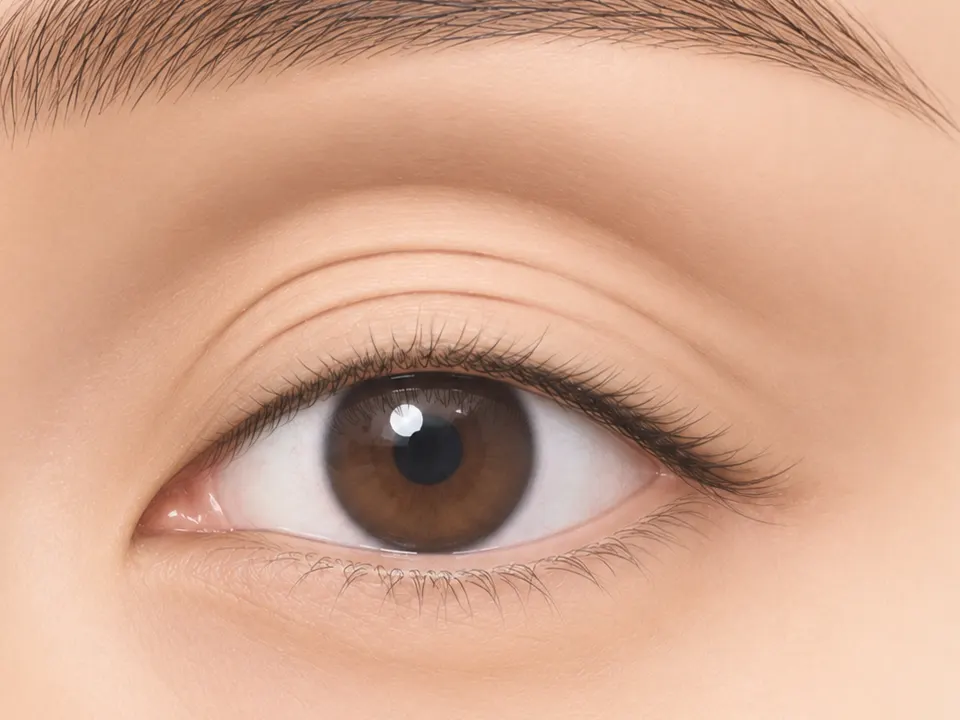
Sunken eyelids are a condition in which the upper eyelid loses volume and the area above the eye looks hollow; it is also called hollow eyes, sunken eyes, or a sunken upper eyelid.
Sunken upper eyelids are mainly corrected by restoring volume with a fat graft.
Sunken Eyelid Fat Graft at a glance
- Method
- Fat graft
- Surgery time
- 30 minutes
- Anesthesia
- IV sedation
- Stitch removal
- None
- Swelling & bruising
- 1 week
- Return to daily life
- Within a few days
This may vary by individual.
Quick answer
How are sunken upper eyelids corrected?
Sunken upper eyelids are mainly corrected by restoring volume with a fat graft. Fat harvested from the abdomen or thighs is purified and injected into the hollow area in small portions. Part of the grafted fat is absorbed, and once the rest settles in, it can last a long time; the fat survival rate varies by individual.
What is an upper eyelid fat graft?
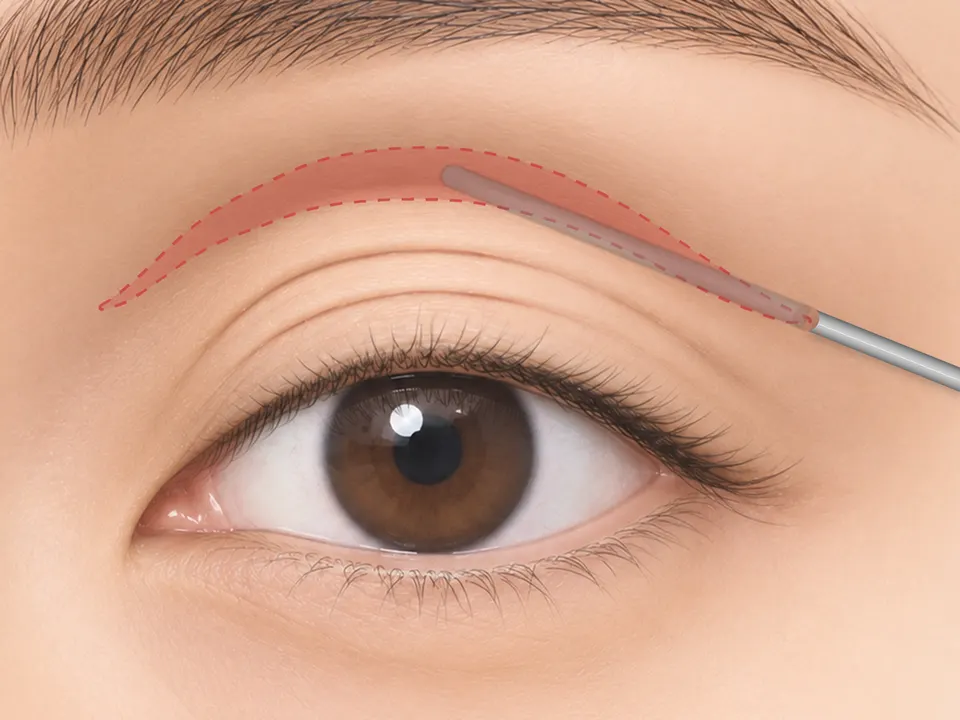
The main method for correcting sunken upper eyelids is a fat graft. Fat obtained from the abdomen or thighs is purified and then injected little by little into the hollow area to restore volume. The surgery takes about 30 minutes.
Who needs an upper eyelid fat graft?
- Lack of volume above the eyes makes you look tired and older
- Deep hollows in the eyelids make the double eyelid fold irregularly into multiple creases
- The eye area looks hollow and gaunt
- The hollowing is severe enough that opening your eyes feels heavy and stiff
- A lot of fat was removed during previous double eyelid surgery or upper blepharoplasty, leaving the eyelids sunken
Why do sunken eyelids (hollow eyes) develop?
The most common cause is aging. As we get older, upper eyelid fat decreases and shifts backward, making the upper eyelids look sunken. They can also look sunken when you are born with little fat or when the bones around the eyes are deep-set.
Signs that you may have sunken eyelids
You may have sunken eyelids if you are told the area above your eyes looks shadowed and hollow, if your double eyelid line is deep or has multiple folds, if you are often told you look tired or older, if your eyelids feel heavy and stiff when you open your eyes, or if a lot of fat was removed during previous double eyelid surgery or upper blepharoplasty.
Why is a fat graft recommended over filler for sunken eyelids?
Sunken eyelids can also be filled with filler, but a fat graft is recommended. The upper eyelid has thin skin and moves a lot, so filler may show through or clump, and it may also shift out of place.
| Fat graft | Filler | |
|---|---|---|
| What is used | Your own fat (harvested from the abdomen or thighs) | Hyaluronic acid injection |
| Duration | Can last a long time once it settles in | Is absorbed over time, so how long it lasts is limited |
| Procedure & recovery | Within a few days | Immediate return to daily life |
| Points to note | It is important to inject an appropriate amount in small portions | May show through or look lumpy, and may migrate to unwanted areas |
Filler is simple to inject and recovery is quick, but because it is gradually absorbed, there is a limit to how long it lasts. A fat graft, on the other hand, involves fat harvesting, so recovery takes longer, but once your own fat settles in, it can last a long time.
How long does an upper eyelid fat graft last?
Part of the grafted fat is absorbed, and the remaining fat usually settles in within 1–2 months. It is generally known that about 70% of the fat survives and about 30% is absorbed, so the plan takes the absorbed amount into account.
A systematic review of fat grafting studies also identified the unpredictable rate of fat absorption as its main limitation (Gir et al., 2012). If volume is still lacking, an additional graft can be considered after 2–3 months, once the grafted fat has settled in.
Are there options other than a fat graft?
If the eyelids look sunken because eye-opening strength is weak, ptosis correction is done along with the fat graft, and when incisional double eyelid surgery or upper blepharoplasty is done at the same time, fat repositioning, which moves fat inside the eyelid into the hollow area, is sometimes performed.
Learn more about ptosis correction →Learn more about upper blepharoplasty →
How an upper eyelid fat graft is performed
- 1
Fat harvesting
Fat is harvested from the abdomen or thighs with a thin tube (cannula).
- 2
Fat purification
The fat is separated in a centrifuge, and only the fat to be grafted is purified.
- 3
Fat injection
Fat is injected into the hollow area with a thin cannula, little by little in multiple layers.
- 4
Finishing
Left–right volume is checked before finishing. No skin incision is made, so there are no stitches.
The upper eyelid has thin skin, so it is important to inject an appropriate amount in portions rather than a large amount at once.
What we check in a sunken eyelid consultation
- The cause of the sunken eyelids (age, naturally little fat, previous surgery, etc.)
- How sunken the eyelids are
- The size of the double eyelid line and whether there are multiple folds
- Eye-opening strength (whether ptosis correction is needed)
- Any previous double eyelid surgery or upper blepharoplasty, and whether fat was removed
Upper eyelid fat graft recovery
Swelling and bruising are most noticeable on days 2–3 after surgery and gradually go down after that. Daily activities are possible.
Day 2 after surgery
- Gauze removed from the harvest site
- Face washing is OK
Days 2–3
- Swelling and bruising peak
From day 3
- Makeup on areas without incisions is OK
First 3–5 days
- Sleep with your head elevated
First week
- Muscle soreness and bruising at the harvest site (thighs or abdomen) gradually improve
- Cover the harvest site with waterproof tape when showering
For 2 weeks
- Do not rub or press the upper eyelids
- Limit big smiles and frowning
For 4 weeks
- Avoid alcohol, smoking, saunas, and strenuous exercise
Upper eyelid fat graft side effects and precautions
What are the side effects of a fat graft?
After a fat graft, besides temporary swelling, bruising, and pain at the harvest site, rare side effects may include nodules where fat clumps and feels lumpy, calcification, asymmetry, and insufficient volume due to more absorption than expected.
Does injecting more make it last longer?
Not necessarily. The upper eyelid has thin skin, so injecting too much can make it look lumpy or puffy; it is important to inject an appropriate amount in portions.
Can an overcorrected fat graft be reduced?
If a fat graft is overcorrected or looks lumpy, the amount can be reduced with liposuction or fat removal. However, fat that has settled in is attached to the surrounding tissue, so removing it completely is difficult, and the correction method depends on the area and amount, which is checked during the consultation.
Sunken Eyelid Fat Graft FAQ
Can I have double eyelid surgery if my upper eyelids are sunken?
Double eyelid surgery is possible even with sunken upper eyelids, but the hollowing can make the line look deep and folded into multiple creases, so it is often corrected at the same time. Fat is grafted into the hollow area, or ptosis correction is added if eye-opening strength is weak, so that the line settles naturally. For eyes that naturally have little fat, it is important to preserve the fat rather than remove it during double eyelid surgery.
What is the survival rate of a fat graft?
The survival rate of a fat graft varies depending on the graft site, how the fat is processed, and each person's constitution and recovery, and part of the grafted fat is absorbed while the rest settles in. It is generally known that about 70% survives and about 30% is absorbed, and the plan takes the absorbed amount into account. Not smoking and avoiding pressure on the area after the graft help the fat survive.
Can a fat graft be repeated?
A fat graft can be repeated, and this is considered when more absorption than expected leaves volume lacking or when you want to fine-tune the balance between areas. An additional graft is often done after 2–3 months, once the previously grafted fat has settled in. Grafting in portions rather than injecting a large amount at once may be better for fat survival and a natural result.
Will the grafted area change if I gain or lose weight after a fat graft?
Fat that has settled in after a fat graft keeps the properties of the fat from the harvest site, so if your weight increases or decreases significantly, the volume of the grafted area can change as well. To keep results stable, it is best to avoid rapid weight changes after surgery.
How is the cost of a fat graft determined?
The cost of a fat graft depends on the number and extent of graft areas, how the fat is processed, and whether other procedures are combined. The areas and amounts needed differ depending on your face, so an exact cost can be provided after a consultation.
Your doctor

Dr. Dahan Kim
Board-Certified Plastic Surgeon Medical Director, Steady Plastic Surgery
Steady Plastic Surgery is an eye-focused plastic surgery clinic in Gangnam (Sinnonhyeon), Seoul. Board-certified plastic surgeon Dr. Dahan Kim personally sees every patient from consultation to surgery and follow-up, focusing on double eyelid surgery, double eyelid revision, under-eye fat repositioning, lower blepharoplasty and middle-aged eye surgery.
- M.D. and master's degree, CHA University School of Medicine
- Plastic surgeon, CHA Bundang Medical Center
- Member, Korean Society of Plastic and Reconstructive Surgeons · Korean Society for Aesthetic Plastic Surgery · Korean Association of Plastic Surgeons
Have questions?
References
- Gir P, Brown SA, Oni G, Kashefi N, Mojallal A, Rohrich RJ. Fat grafting: evidence-based review on autologous fat harvesting, processing, reinjection, and storage. Plast Reconstr Surg. 2012;130(1):249-258. doi:10.1097/PRS.0b013e318254b4d3 PMID 22743888
- 박대환, 백봉수, Nahai F. 안성형외과학. 제3판. 군자출판사; 2009. ISBN 978-89-6278-139-7. [in Korean]
- Cho I. The Art of Blepharoplasty. Koonja Publishing; 2017. ISBN 979-11-5955-234-2.
- 대한미용성형외과학회. 미용성형외과학 2. 제2판. 군자출판사; 2023. ISBN 979-11-7068-001-7. [in Korean]