Double Eyelid Surgery (Asian Blepharoplasty)
Natural adhesion or incisional: the method and line that suit your eyelids

Double eyelid surgery connects the upper eyelid skin to the eye-opening muscle or the tarsal plate so that the skin folds at a set position when the eye opens.
We check eyelid skin thickness, how much the skin droops, the amount of fat in the upper eyelid, and the strength of eye opening to decide between natural adhesion and incisional surgery.
Double Eyelid Surgery (Asian Blepharoplasty) at a glance
- Method
- Natural adhesion (non-incisional) / Incisional
- Surgery time
- Natural adhesion about 30 minutes / Incisional 1–1.5 hours
- Anesthesia
- Local anesthesia or IV sedation
- Stitch removal
- Natural adhesion: not needed / Incisional: about 7 days
- Swelling & bruising
- Natural adhesion 1–2 weeks / Incisional 2–4 weeks
- Back to daily life
- Natural adhesion within a few days / Incisional 1 week
This may vary with your eyelid condition and any procedures done at the same time.
Quick answer
Natural adhesion or incisional double eyelid surgery: which is right for me?
The method for double eyelid surgery is decided by checking eyelid skin thickness, how much the skin droops, the amount of upper eyelid fat, and the strength of eye opening. Natural adhesion is often considered when the skin is thin with little drooping, and the incisional method when the upper eyelid is thick or the skin droops. The line height you want also affects the choice of method.
What is double eyelid surgery (Asian blepharoplasty)?
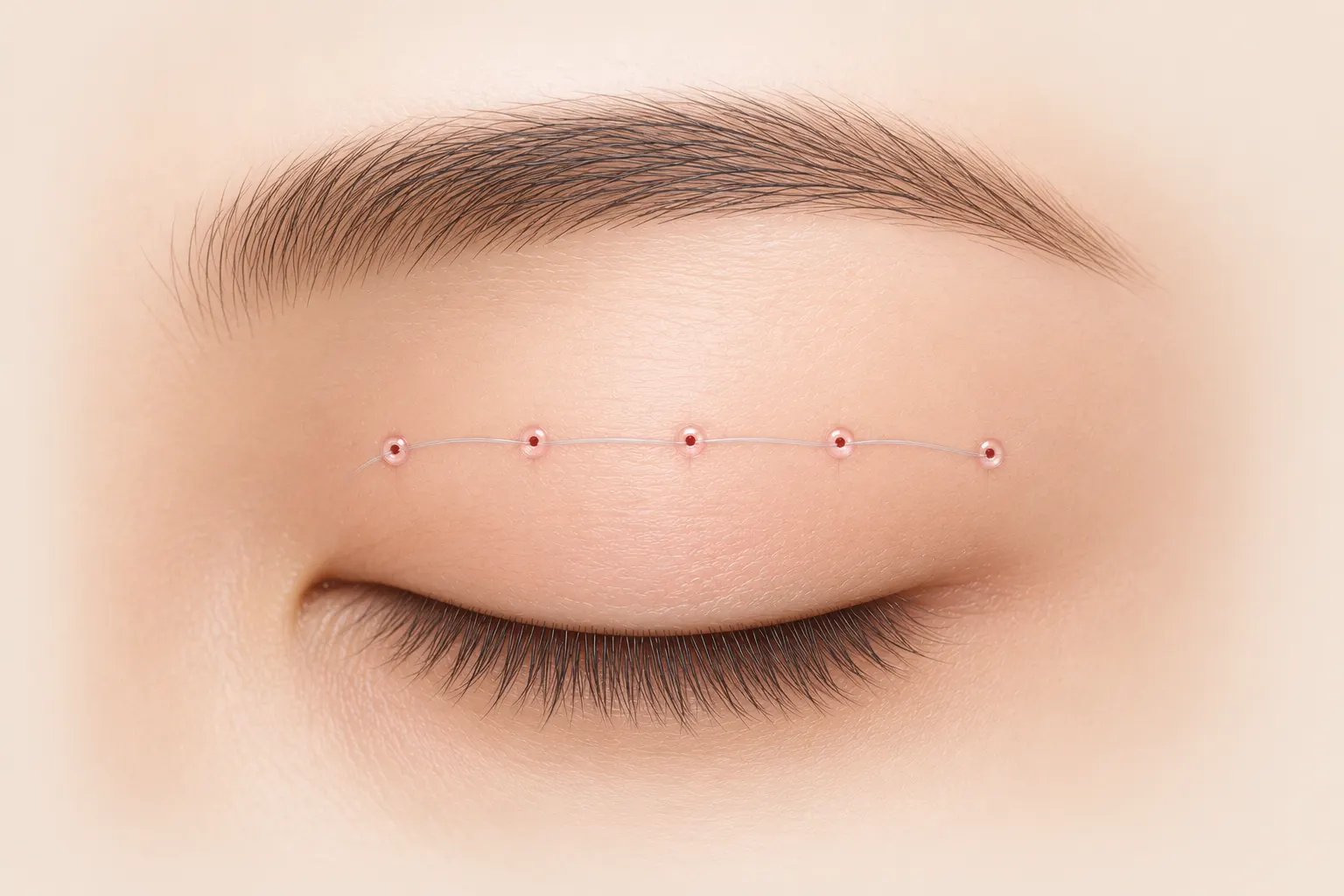
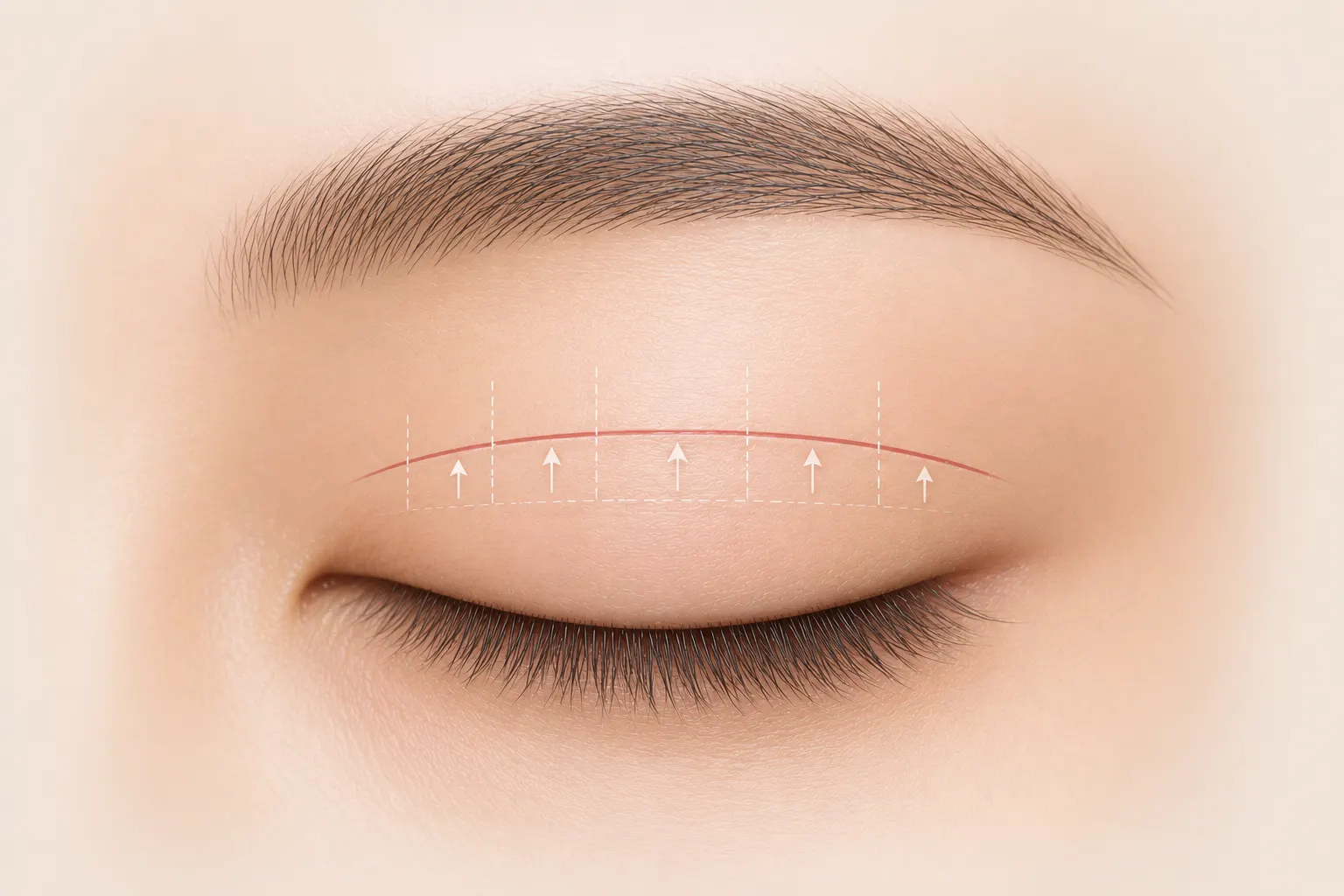
Double eyelid surgery is broadly divided into natural adhesion and incisional methods. Non-incisional double eyelid surgery with natural adhesion is a type of buried suture method: instead of a long incision, sutures are placed through a few tiny openings so the skin adheres to the deeper tissue and forms a crease. The incisional method opens the skin along the planned line, removes loose skin or fat as needed, and then fixes the double eyelid crease.
When double eyelid surgery may help
- You have no double eyelid crease (monolid) and want one
- You have a hidden (inner) double eyelid and want a more defined line
- Drooping skin covers the eyelid and makes the eyes look smaller (pseudoptosis)
- The eyes look uneven because the line height or skin drooping differs between the two sides
If weak eye opening leaves the pupils partly covered or the eyes look sleepy, double eyelid surgery alone may not be enough, so ptosis correction may be considered as well.
How do natural adhesion and incisional double eyelid surgery differ?
Neither method is better in itself; what matters is choosing the one that fits your eyes.
| Natural adhesion (non-incisional) | Incisional | |
|---|---|---|
| Method | Sutures placed through tiny openings, guiding the tissue to adhere | Incision along the line, trimming of skin and fat, then fixation |
| Suitable for | Thin eyelid skin with little drooping | Thick upper eyelids or drooping skin |
| Surgery time | About 30 minutes | 1–1.5 hours |
| Swelling | Usually 1–2 weeks | Usually 2–4 weeks |
| When the line looks natural | Usually 2–4 weeks | 1–3 months |
| Chance of the line loosening | Relatively higher | Relatively lower |
Swelling and recovery speed vary widely from person to person.
Types of double eyelid lines: in, in-out, semi-out and out lines
Double eyelid lines are grouped as in line, in-out line, semi-out line and out line, depending on where the line starts at the inner corner of the eye.
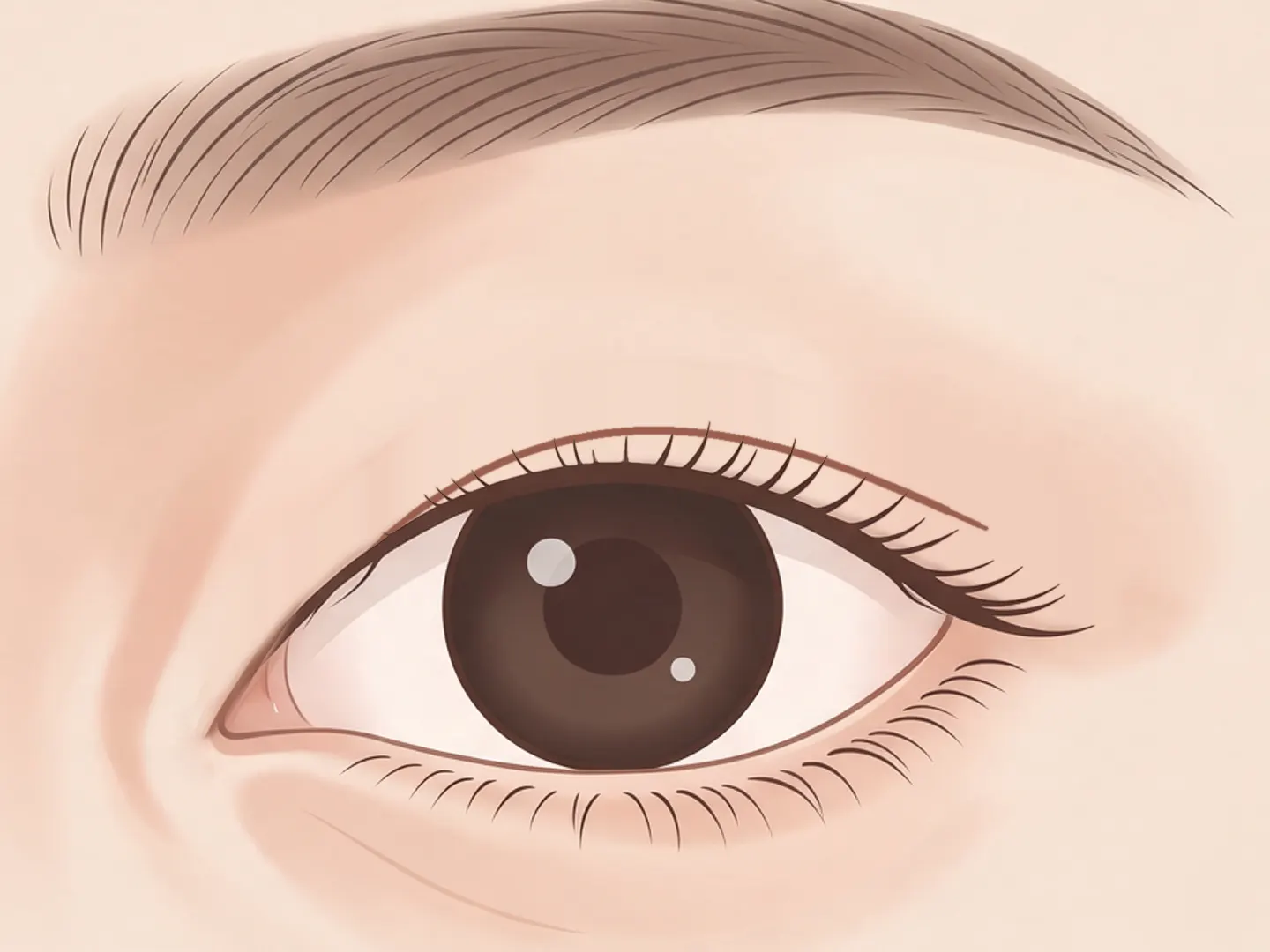
In line
Starts inside the epicanthal fold, so the line is hidden near the inner corner and shows more toward the outer corner.
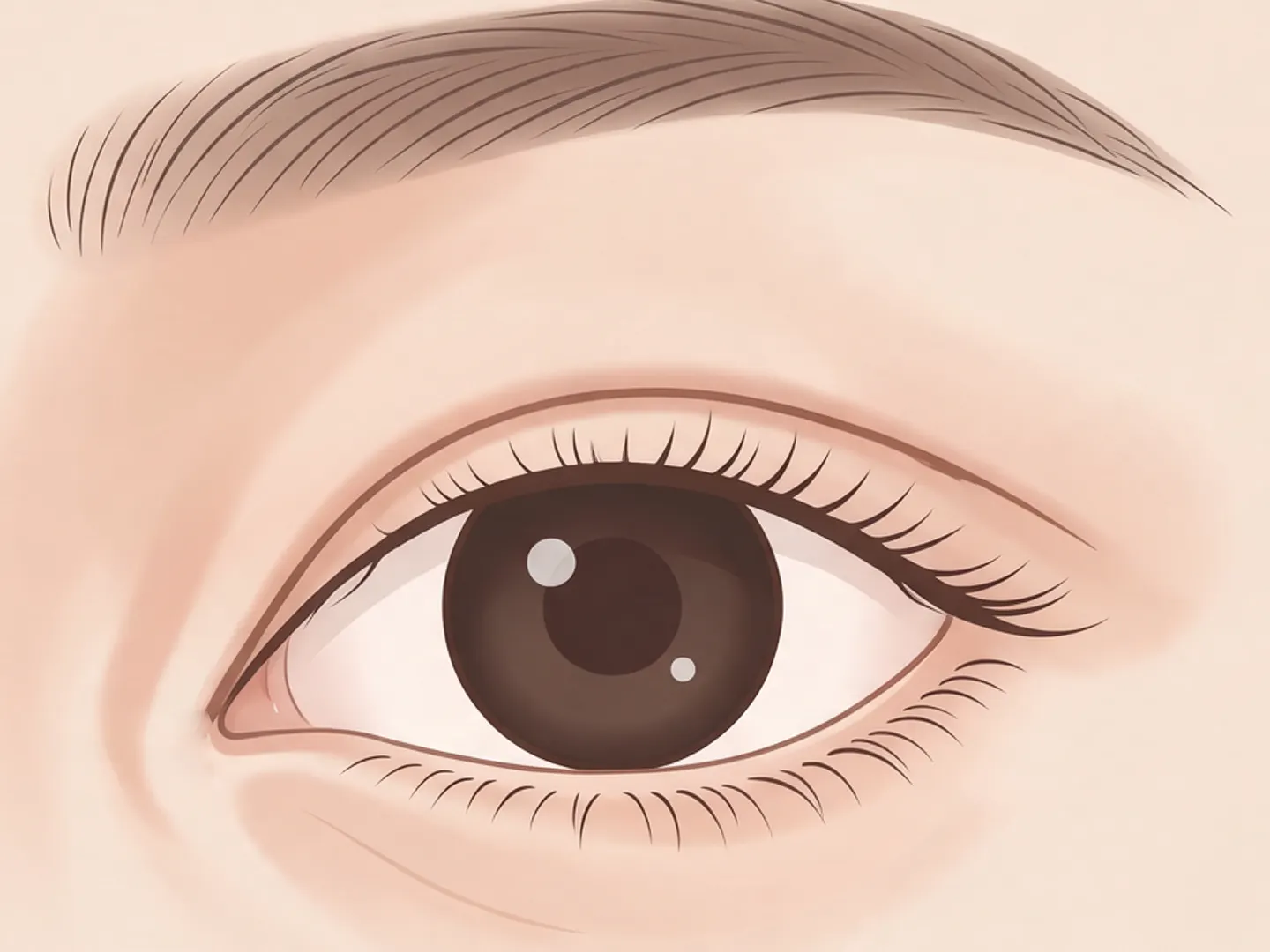
In-out line
Starts inside the epicanthal fold at the inner corner and widens from the middle of the eye.
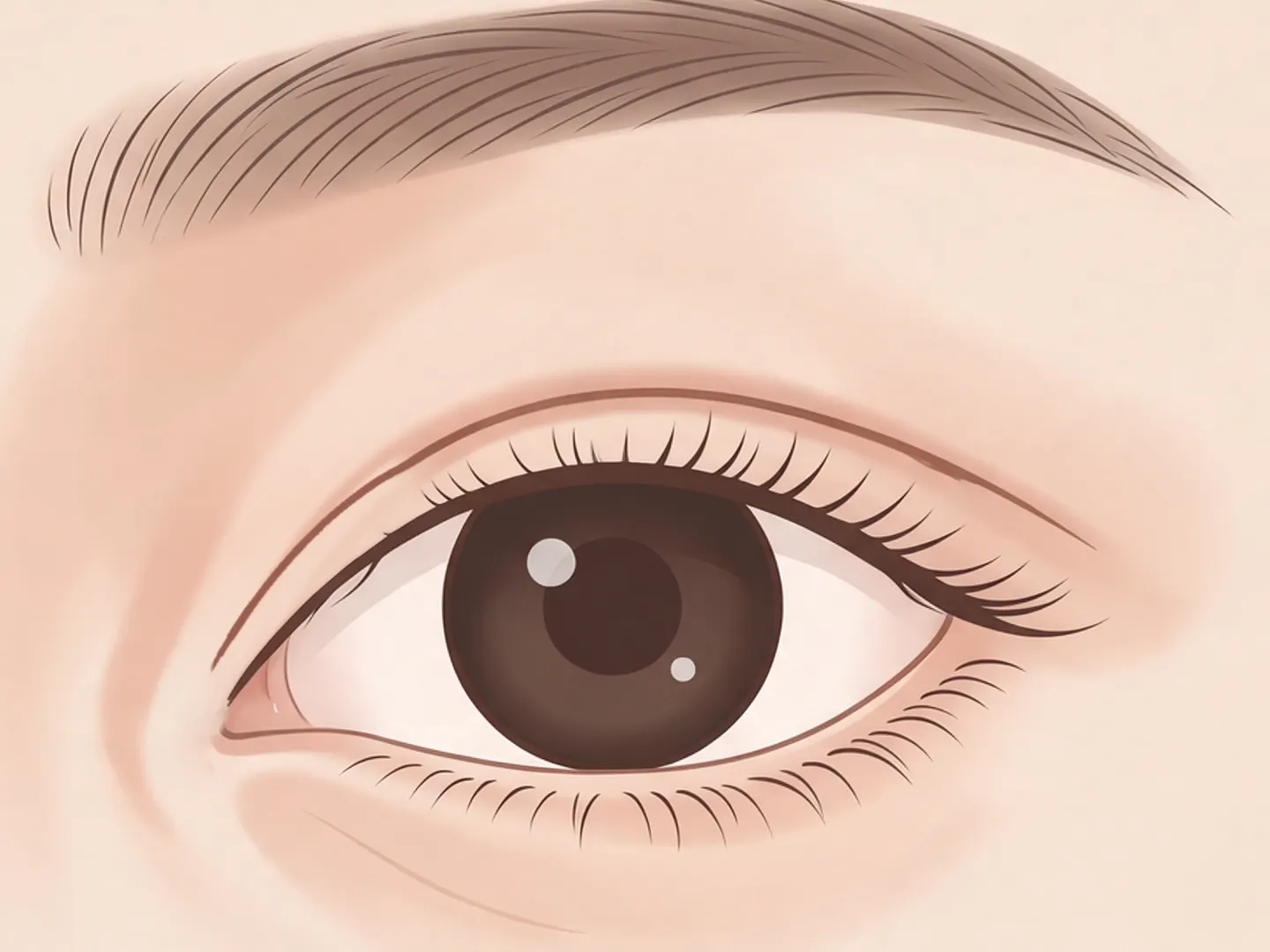
Semi-out line
Starts slightly apart from the epicanthal fold, so the line is visible closer to the inner corner than an in-out line.
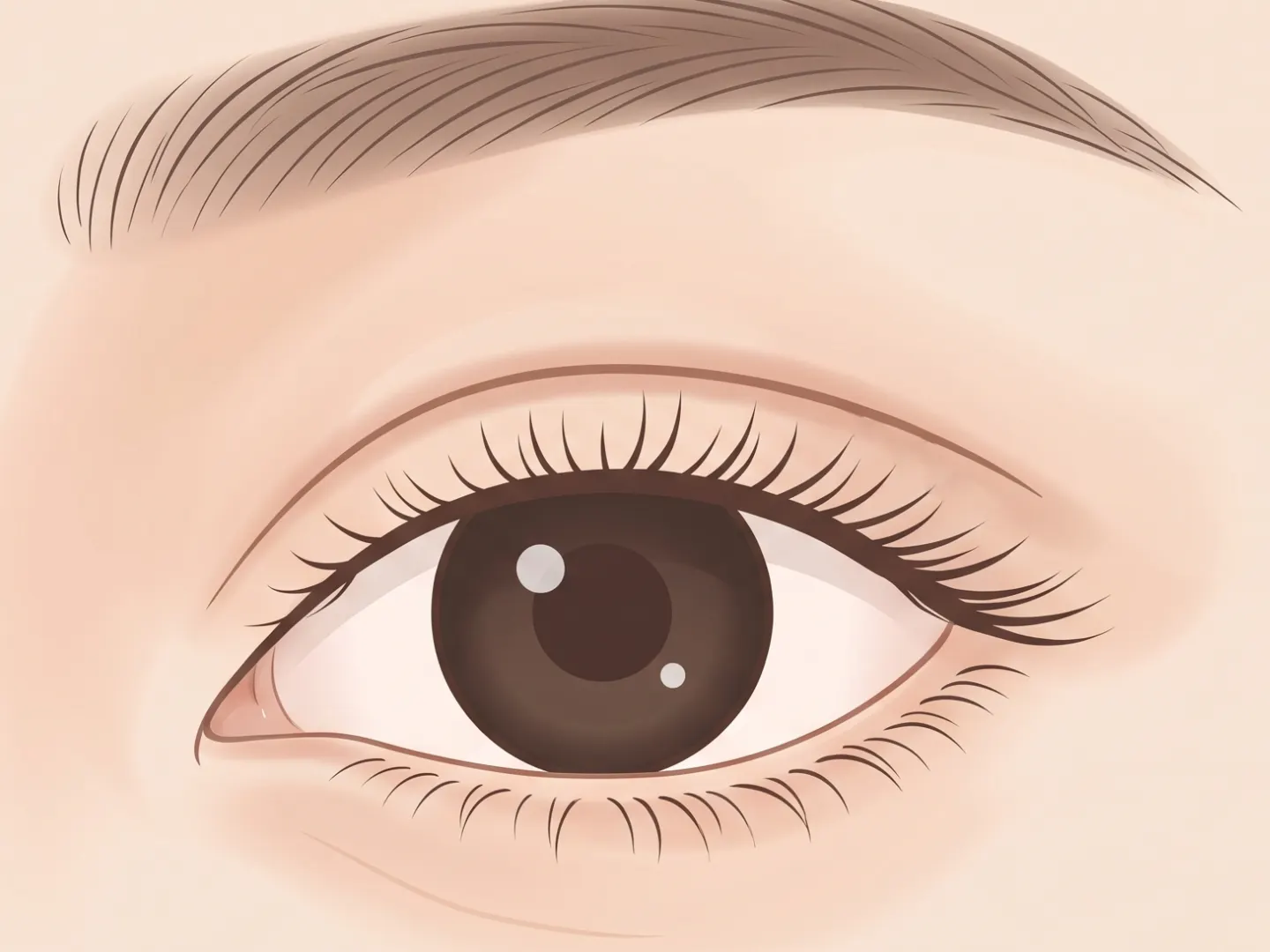
Out line
Starts apart from the epicanthal fold right at the inner corner and runs at a similar width to the outer corner.
With a prominent epicanthal fold, epicanthoplasty (inner corner) may be needed to create an out line.
How is the right double eyelid line chosen?
The height of the double eyelid line is decided by considering your preference, eye size, eyelid thickness, the distance between the eye and eyebrow, and your overall facial impression. So-called "sausage eyes" tend to occur when the line is set too high for the eyelid thickness or eye size. At consultation we first assess facial balance, skin, eye shape and eye-opening strength, then mark lines directly on your eyelids to decide together on a line that suits your face.
How is double eyelid surgery for men different?
Double eyelid surgery is also common among men, and many men prefer a low, natural line that does not change their impression much. Men often have thicker eyelids and a shorter distance between the eyebrow and eye, so the line height and method are chosen with extra care. If the eyes look sleepy, ptosis correction may be considered at the same time.
How double eyelid surgery is performed
- 1
Line design
We assess facial balance, skin, eye shape and eye-opening strength, then mark the line on your eyelids to set its height and shape.
- 2
Anesthesia
Surgery is done under local anesthesia or IV sedation, chosen after checking your health and the extent of surgery.
- 3
Line fixation
With natural adhesion, sutures are placed through tiny openings so the skin adheres to the deeper tissue. With the incisional method, an incision is made along the line, loose skin or fat is trimmed, and the double eyelid is fixed.
- 4
Finishing
Natural adhesion leaves no stitches to remove; with the incisional method, stitches are removed about 7 days after closure.
What we check at a double eyelid consultation
- How prominent or deep-set the eyeballs are
- Asymmetry
- Eyelid skin thickness and how much the skin droops
- The amount of upper eyelid fat
- Eye-opening strength and how much the forehead muscles are used to open the eyes
- Eye size and the distance between the eye and eyebrow
- The shape of the epicanthal fold and the lacrimal lake
- The line height you want and your overall facial impression
Double eyelid surgery swelling and recovery time
2–3 days after surgery
- Swelling and bruising are at their peak
First 3–5 days
- Sleep with your head elevated on pillows
- Cold compresses for the first 7 days
After 3 days
- Natural adhesion: washing the face with water is allowed
- Makeup is allowed on areas without wounds
Around 1 week
- Incisional: stitches removed, face washing from the next day
- Natural adhesion: washing with cleansing foam is allowed
After 4 weeks
- Makeup and contact lenses on the sutured area are allowed
- Alcohol, smoking, swimming, saunas and strenuous exercise can be resumed
The line usually takes 2–4 weeks to look natural with natural adhesion and about 1–3 months with the incisional method, and this varies widely between individuals.
Side effects and when revision may be needed
What are the possible side effects of double eyelid surgery?
After double eyelid surgery, temporary swelling, bruising and a foreign-body sensation are common; rarely, asymmetry, loosening of the line, a line higher or thicker than planned, scarring, infection or hematoma can occur. Most improve with time or are resolved with follow-up and treatment, but some may require revision surgery. Accurate evaluation of the eyelids before surgery and following post-operative instructions are important.
Can the double eyelid line loosen after surgery?
A double eyelid line can fade or loosen over time if the eyelids are thick or you often rub your eyes, and this is relatively more likely with non-incisional methods. That is why it is important to evaluate eyelid thickness and tissue condition before choosing a method.
Does incisional double eyelid surgery leave a scar?
With incisional double eyelid surgery, the incision is planned to sit within the double eyelid crease, so after healing it is often not visible when the eyes are open. A scar may be visible when the eyes are closed. Early on there may be redness or firmness, which gradually fades over several months. How much of a scar remains depends on skin type, constitution and aftercare.
When can double eyelid revision surgery be done?
Double eyelid revision surgery is generally done at least 6 months after the first surgery, once the tissue has softened and settled. Revision must take into account scarring and adhesions from the previous surgery and the amount of remaining skin, so accurate diagnosis matters even more than for a first surgery. However, if there is infection or a sudden change in the line, it is best to be seen first regardless of timing.
Double Eyelid Surgery (Asian Blepharoplasty) FAQ
How long does double eyelid surgery take, and what anesthesia is used?
Double eyelid surgery usually takes about 30 minutes with natural adhesion and 1–1.5 hours with the incisional method. Both local anesthesia and IV sedation are possible. Adding ptosis correction or canthoplasty takes longer, and the type of anesthesia is decided at consultation after checking your health and the extent of surgery.
When can I wash my face, wear makeup and go back to work after double eyelid surgery?
After incisional double eyelid surgery, stitches are usually removed on day 7, face washing is possible from the day after stitch removal, and makeup on the sutured area from 4 weeks after surgery. With natural adhesion, washing with water and makeup on areas without wounds are possible from 3 days after surgery, and washing with cleansing foam from 7 days. Eye makeup and contact lenses are possible from 1 month after surgery. Many people return to work a few days after natural adhesion and after stitch removal with the incisional method, and it is best to avoid swimming, saunas and exercise that causes heavy sweating for 1 month.
Do I need ptosis correction along with double eyelid surgery?
Ptosis correction is not needed for every double eyelid surgery; it is considered when weak eye opening leaves the pupils partly covered, the eyes look sleepy, or eye size is asymmetric. Whether you need ptosis correction is decided at consultation after checking the strength of the eye-opening muscle.
Can double eyelid surgery correct uneven eyes?
Whether double eyelid surgery can correct uneven eyes depends on the cause. Unevenness caused by different line heights or different amounts of skin drooping often improves with double eyelid surgery. If one eye opens more weakly, ptosis correction is needed as well, and asymmetry from differences in eyebrow height, bone structure or skin thickness may be difficult to fully match with surgery.
Do hidden (inner) double eyelids need double eyelid surgery?
A hidden double eyelid has a crease that sits tucked inside the eyelid and is hard to see from the outside, so double eyelid surgery is not necessarily required. If you want a more defined line, surgery is often done higher than the existing line. Natural adhesion or the incisional method is chosen based on eyelid thickness and drooping.
When can I drink alcohol and smoke after double eyelid surgery?
After double eyelid surgery, it is best to avoid alcohol and smoking for at least 4 weeks. Alcohol can prolong swelling and bruising, and smoking reduces blood circulation, which can slow wound healing and raise the risk of infection. The same period is recommended for both natural adhesion and incisional surgery, and swimming, saunas and strenuous exercise should also be avoided for 4 weeks.
How is the cost of double eyelid surgery determined?
The cost of double eyelid surgery depends on the method (natural adhesion or incisional), whether combined procedures such as ptosis correction or canthoplasty are done, and whether it is a revision. Even with the same method, the extent of surgery can differ with your eyelid condition, so the exact cost is given after consultation.
Your doctor

Dr. Dahan Kim
Board-Certified Plastic Surgeon Medical Director, Steady Plastic Surgery
Steady Plastic Surgery is an eye-focused plastic surgery clinic in Gangnam (Sinnonhyeon), Seoul. Board-certified plastic surgeon Dr. Dahan Kim personally sees every patient from consultation to surgery and follow-up, focusing on double eyelid surgery, double eyelid revision, under-eye fat repositioning, lower blepharoplasty and middle-aged eye surgery.
- M.D. and master's degree, CHA University School of Medicine
- Plastic surgeon, CHA Bundang Medical Center
- Member, Korean Society of Plastic and Reconstructive Surgeons · Korean Society for Aesthetic Plastic Surgery · Korean Association of Plastic Surgeons
Have questions?
References
- Jung GS. Natural Adhesion Blepharoplasty Technique. J Craniofac Surg. 2021;32(2):e220-e222. doi:10.1097/SCS.0000000000006761 PMID 33705081
- Baek JS, Ahn JH, Jang SY, Chee E, Jang JW. Comparison Between Continuous Buried Suture and Interrupted Buried Suture Methods for Double Eyelid Blepharoplasty. J Craniofac Surg. 2015;26(7):2174-2176. doi:10.1097/SCS.0000000000001984 PMID 26413962
- Jeong S, Lemke BN, Dortzbach RK, Park YG, Kang HK. The Asian upper eyelid: an anatomical study with comparison to the Caucasian eyelid. Arch Ophthalmol. 1999;117(7):907-912. doi:10.1001/archopht.117.7.907 PMID 10408455
- Saonanon P. Update on Asian eyelid anatomy and clinical relevance. Curr Opin Ophthalmol. 2014;25(5):436-442. doi:10.1097/ICU.0000000000000075 PMID 24852200
- Park JI. Orbicularis-levator fixation in double-eyelid operation. Arch Facial Plast Surg. 1999;1(2):90-95. doi:10.1001/archfaci.1.2.90 PMID 10937084
- 박대환, 백봉수, Nahai F. 안성형외과학. 제3판. 군자출판사; 2009. ISBN 978-89-6278-139-7. [in Korean]
- Cho I. The Art of Blepharoplasty. Koonja Publishing; 2017. ISBN 979-11-5955-234-2.
- 대한미용성형외과학회. 미용성형외과학 2. 제2판. 군자출판사; 2023. ISBN 979-11-7068-001-7. [in Korean]